Advanced Jawbone Restoration
Bone Grafts in Sherman, TX
Rebuild lost bone structure to support long-term oral health and stability.
Bone grafting is a restorative procedure used to strengthen and rebuild areas of the jawbone affected by tooth loss, gum disease, or trauma. Restoring healthy bone support can improve oral stability and prepare the jaw for future treatments such as dental implants. North Texas Dental provides personalized bone grafting care focused on preserving long-term function and smile health.

A PILLAR of EXCELLENCE
Bone Grafting to Restore Jawbone Support
Healthy jawbone structure is important for supporting teeth, maintaining facial shape, and providing stability for dental restorations. Patients in Sherman and surrounding North Texas communities may experience bone loss after missing teeth, periodontal disease, infection, or extraction. Bone grafting helps rebuild weakened areas of bone and support healthier long-term oral outcomes.
What Is a Dental Bone Graft?
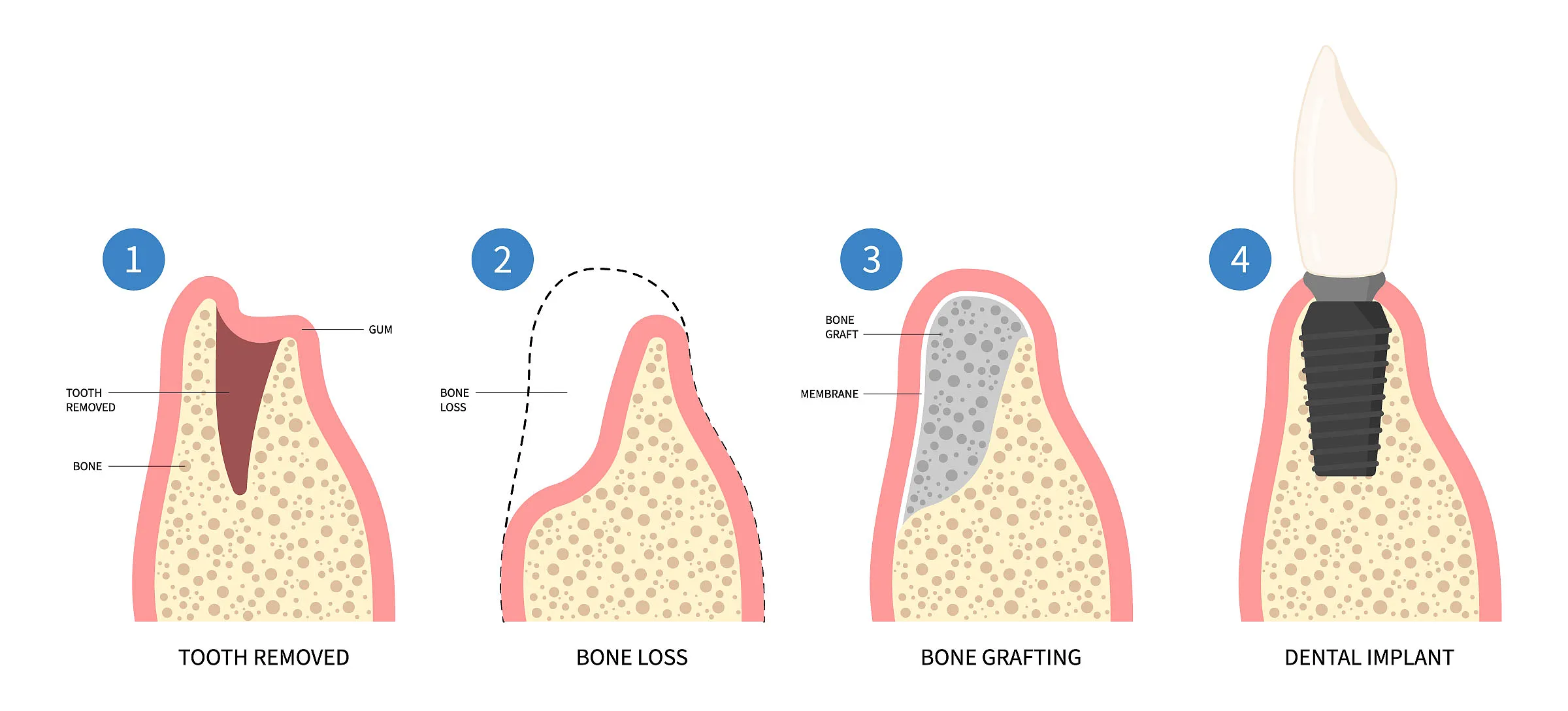
A bone graft involves placing grafting material into areas where bone has deteriorated or become insufficient. Over time, the graft supports new bone growth and strengthens the jaw structure. Bone grafts are commonly recommended before dental implant placement or to help preserve the jaw after tooth removal.
- Jawbone Preservation Help reduce bone loss following tooth extraction or missing teeth.
- Implant Support Create stronger bone structure for future dental implant placement.
- Periodontal Bone Restoration Address bone loss related to advanced gum disease.
- Improved Oral Stability Support healthier long-term function and facial structure.
When Are Bone Grafts Recommended?
Bone grafting may be recommended when there is not enough healthy jawbone to support implants or maintain oral function properly. Early treatment can often help preserve bone volume and improve restorative treatment options.
- Bone preservation following tooth extraction
- Preparation for dental implant placement
- Treatment planning after periodontal bone loss
- Support for long-term jawbone stability
What to Expect During Recovery
Healing time after bone grafting varies depending on the size and location of the graft. Patients may experience temporary swelling or mild discomfort while the area heals and integrates with the surrounding bone. Following post-treatment instructions carefully helps support successful healing.
Benefits of Bone Grafting
Bone grafting can improve eligibility for dental implants, help preserve facial structure, and reduce complications associated with advanced bone loss. By strengthening the jawbone, patients may benefit from greater restorative stability and improved long-term oral health.
If you have experienced tooth loss or have been told you may need additional bone support, scheduling a consultation can help determine whether bone grafting is right for your treatment plan.
IN SUMMARY→
A bone graft rebuilds jawbone lost to extraction, gum disease or trauma by placing graft material at the site so new bone can form around it. North Texas Dental performs bone grafting in Sherman, Texas, most often to create enough bone volume to support a dental implant.
Call (903) 893-2800 to schedule a consultation, or book an appointment online.
Bone Grafts FAQ
- What is a dental bone graft?
- A bone graft rebuilds missing jawbone by placing graft material into a deficient site so the body forms new bone around it. The material may be autograft taken from the patient, allograft from a tissue bank, xenograft of bovine origin, or a synthetic alloplast. North Texas Dental performs bone grafting in Sherman, TX.
- Why would I need a bone graft?
- The alveolar ridge begins resorbing within months of losing a tooth, and periodontal disease or trauma accelerates it. A graft restores the height and width needed to place an implant, preserves a socket immediately after extraction, or rebuilds bone lost around teeth already affected by periodontal disease.
- Can bone grafts help with dental implants?
- Yes. An implant needs sufficient bone volume to achieve primary stability and osseointegration. Grafting builds the ridge up first, and a cone beam CT scan measures available height and width beforehand. Socket preservation grafts often heal alongside implant placement, while larger ridge augmentations are usually staged months apart.
- Does bone grafting hurt?
- The procedure is carried out under local anesthetic, so the site is numb throughout, and oral or IV sedation is available for anxious patients or longer cases. Afterwards most people describe soreness and swelling similar to an extraction, generally managed with over-the-counter anti-inflammatories for a few days.
- How long does a bone graft take to heal?
- Soft tissue closes within about 2 weeks, while the graft itself needs roughly 3–6 months to mineralize into bone strong enough to hold an implant. Larger block grafts and sinus lifts can take closer to 9 months. Healing is confirmed with radiographs before implant placement.
- What causes jawbone loss?
- The most common cause is tooth loss, because the ridge no longer carries bite load and resorbs. Periodontal disease destroys the alveolar bone supporting the teeth, and trauma, infection around a root tip, and long-term denture wear all contribute to continued loss of ridge height and width.
- Can bone loss affect facial appearance?
- Yes. The alveolar ridge supports the lips and lower face, so continued resorption shortens the distance between nose and chin, allows the lips to fold inward, and deepens the folds at the corners of the mouth. Preserving or rebuilding bone helps maintain natural facial proportions.
- How do I know if I need a bone graft?
- A clinical examination with a cone beam CT scan shows whether the ridge has adequate height and width and how close the sinus floor or nerve canal sits. North Texas Dental evaluates candidates for bone grafting in Sherman, TX, with surgical procedures performed by oral and maxillofacial surgeon Dr. Tom Draper, DMD, MD.